At first, AlUla brought other desert journeys to mind: Colombia, Tunisia, Petra and Wadi Rum in Jordan. Then it began to feel like a place of its own. The sandstone was extraordinary, but the landscape alone does not explain why I wanted to return.
Ancient places, art, food and contemporary hospitality were close enough to move between in a single journey. I could be looking at a tomb façade, spending far longer than planned in an exhibition, or sitting at a table facing the old town. That mixture was what stayed with me.
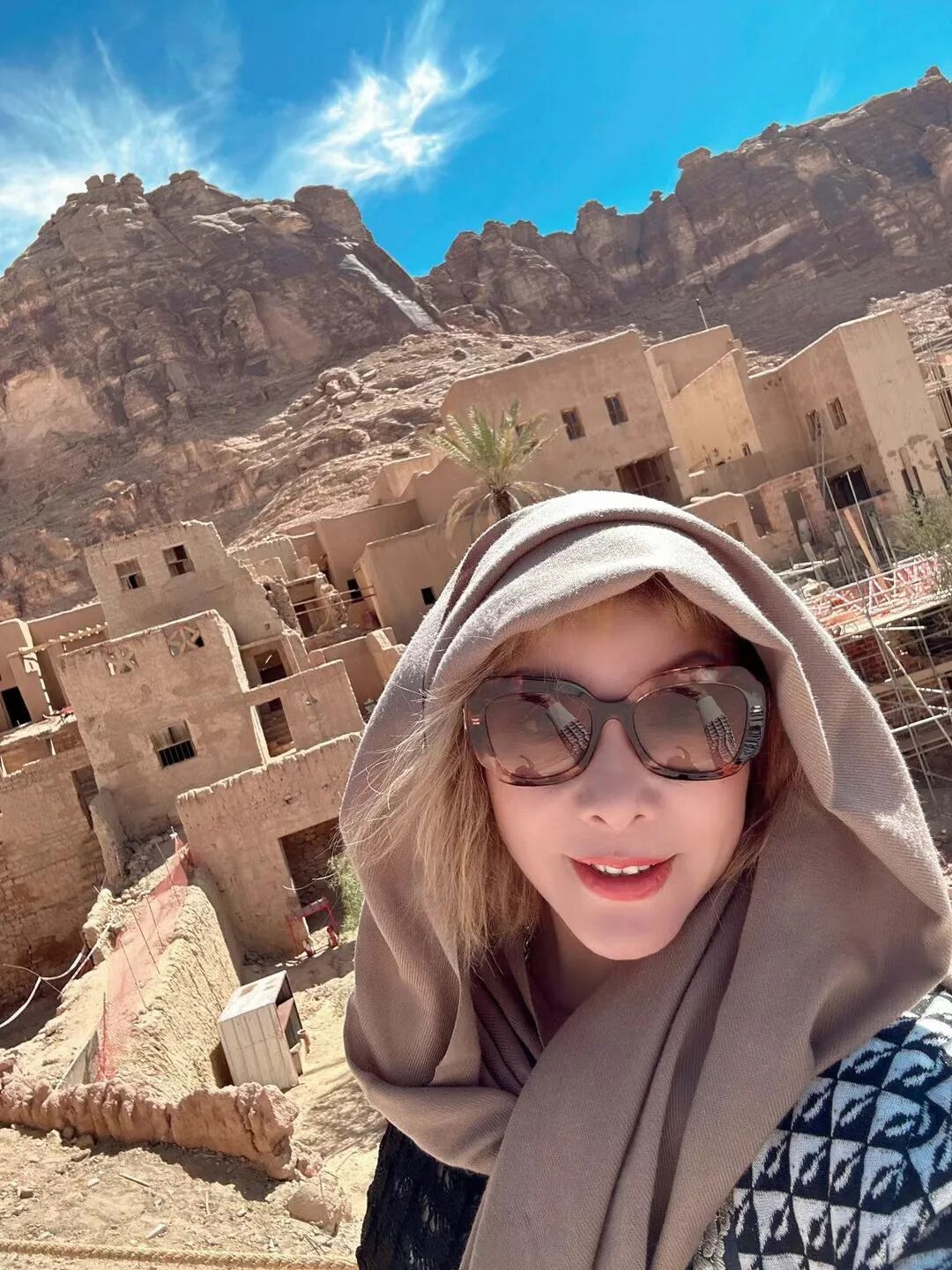
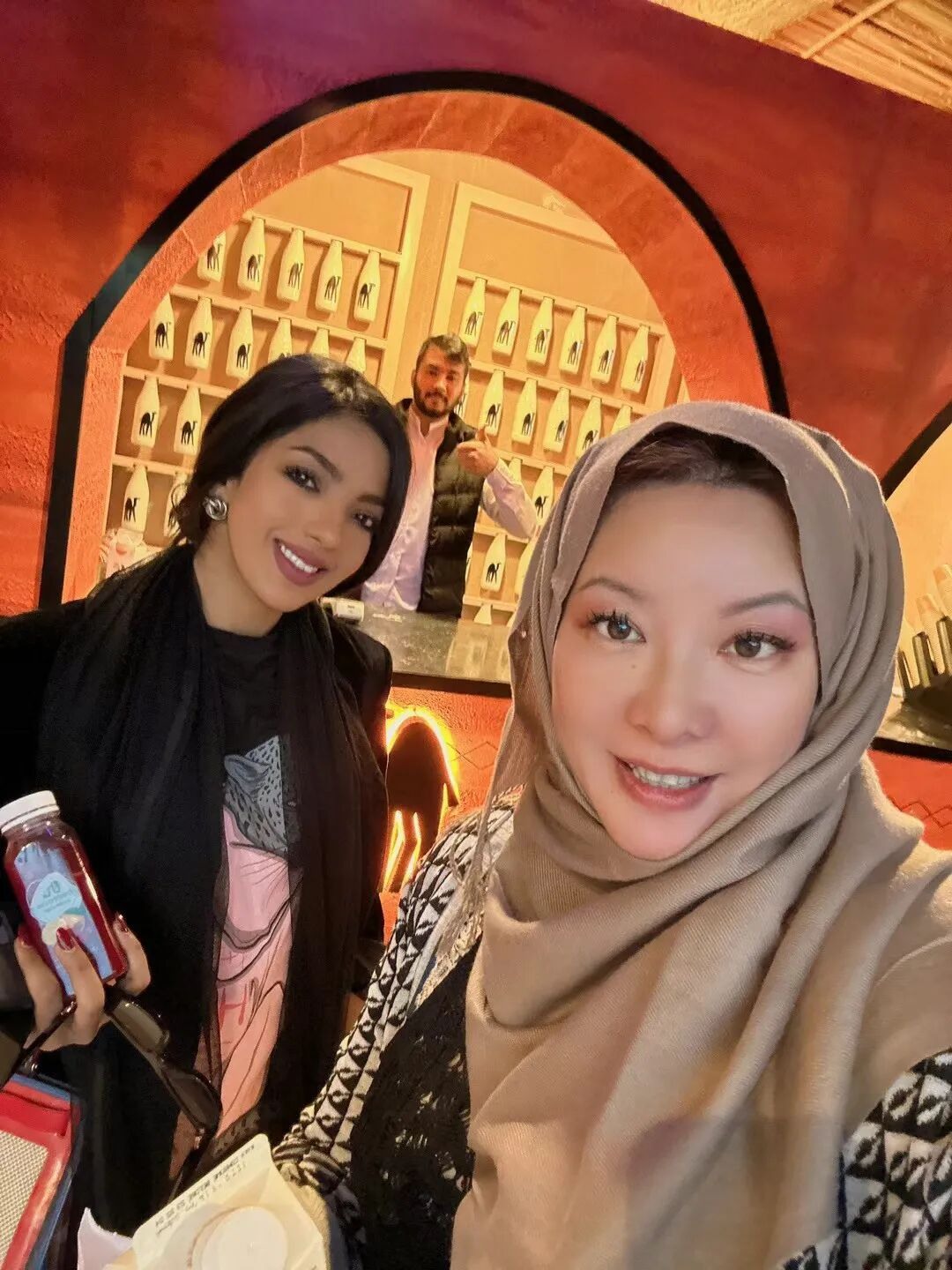
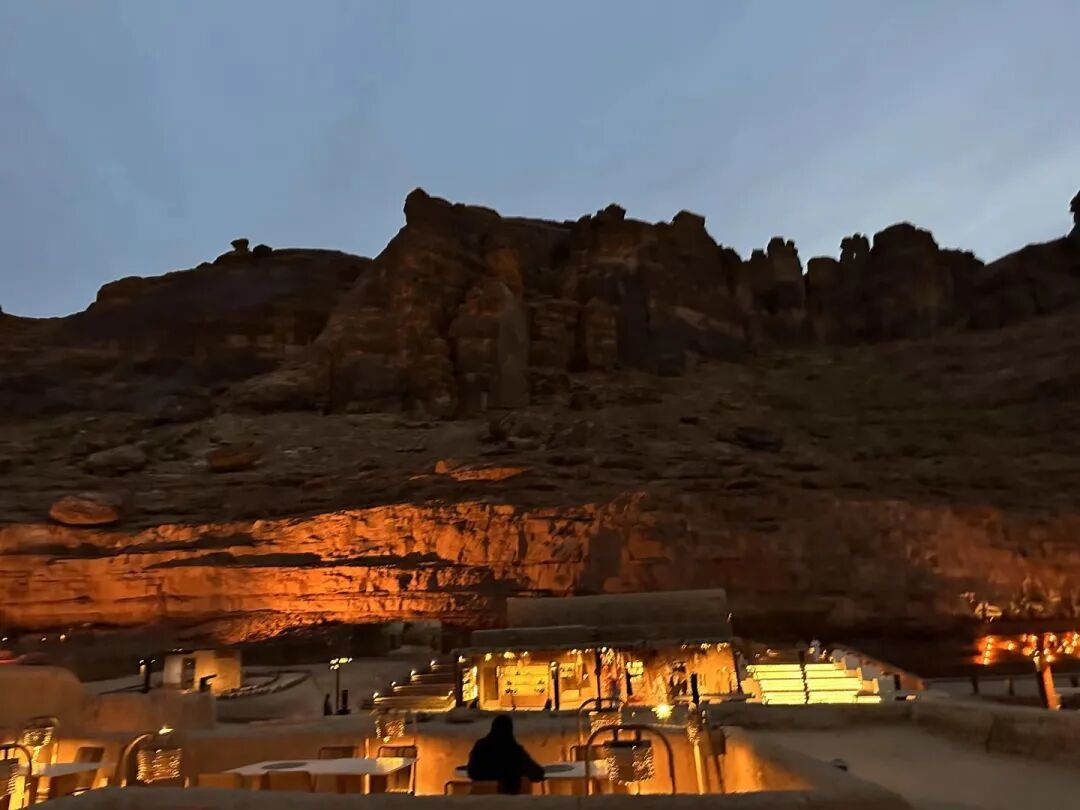
Lunch with a view of the old town
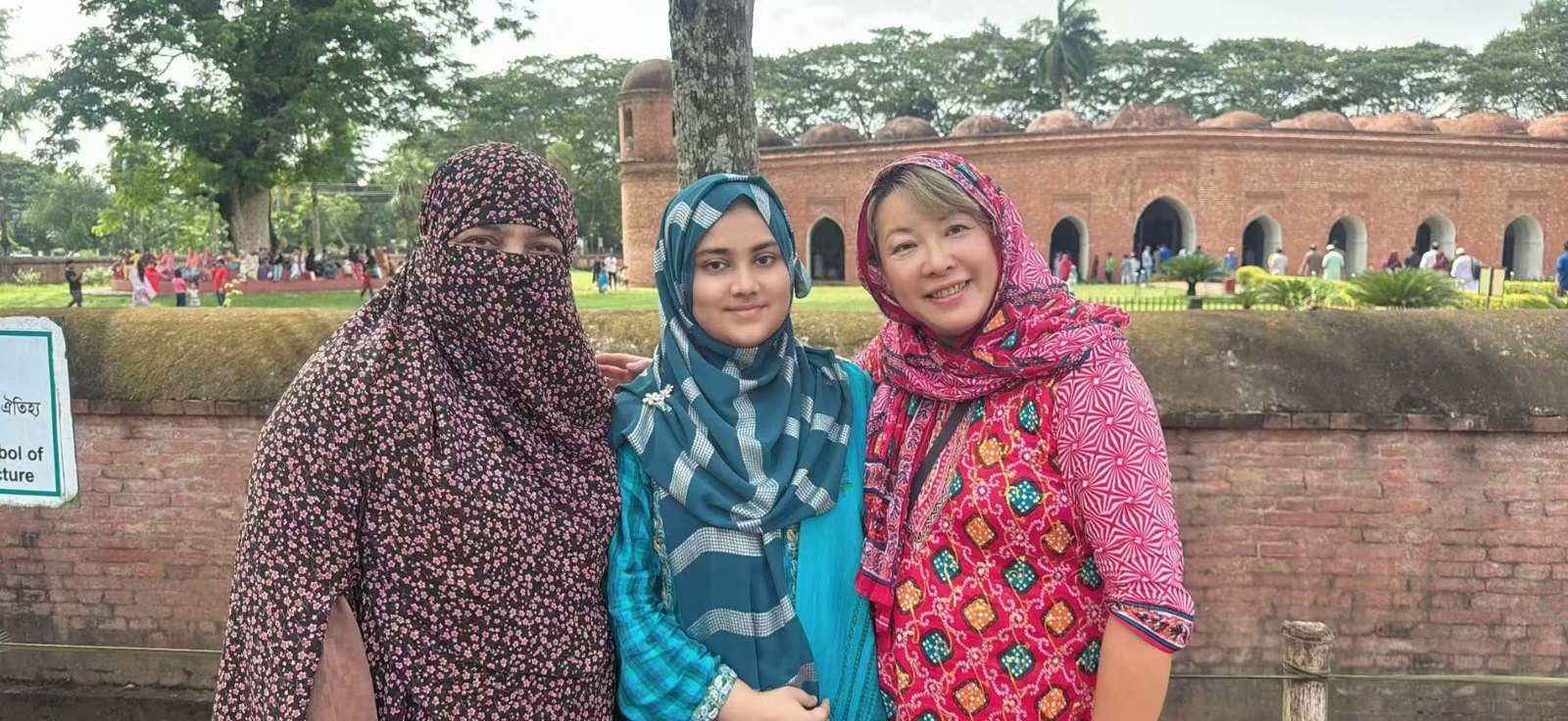
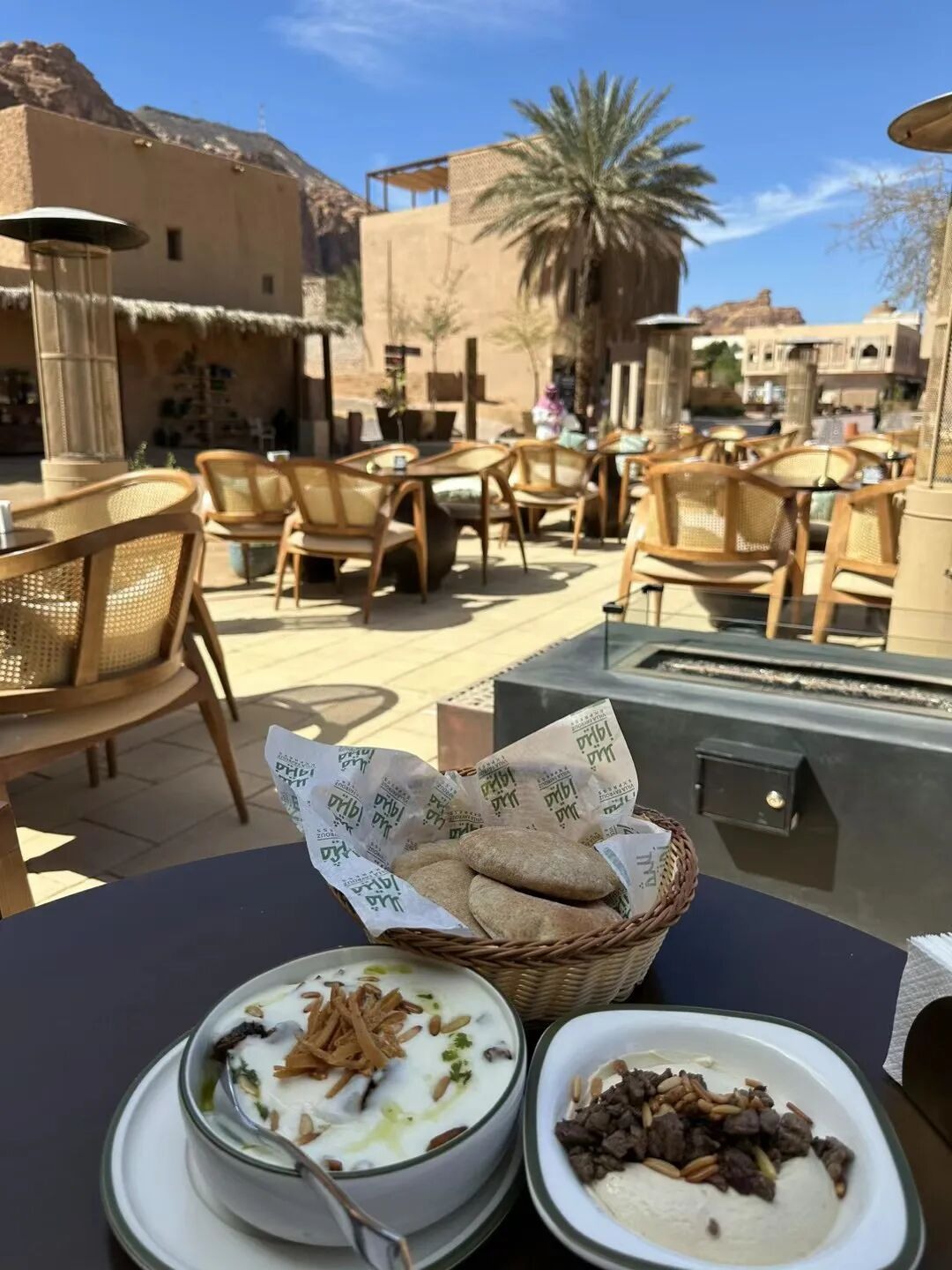
At Villa Fayrouz I ordered eggplant fatteh and hummus with meat and pine nuts. I chatted with German and Italian travellers at the next table. There was a view of the old-town valley, a breeze and music. I remember thinking: this is the feeling I came for.
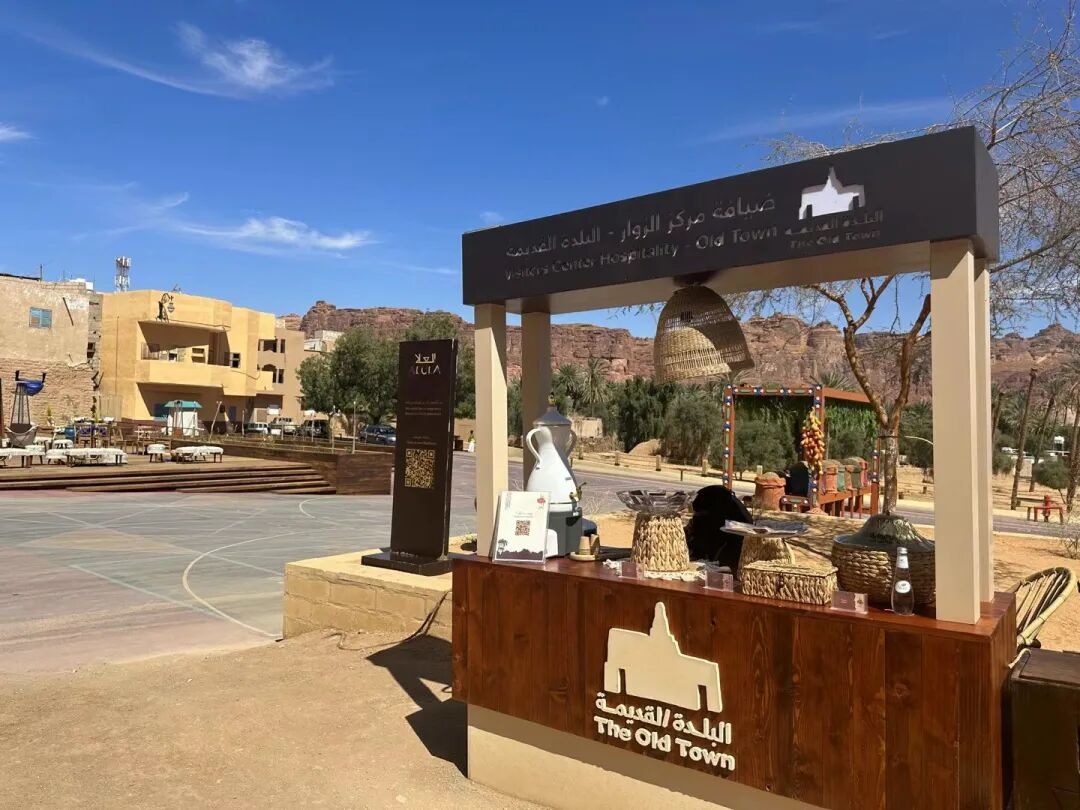
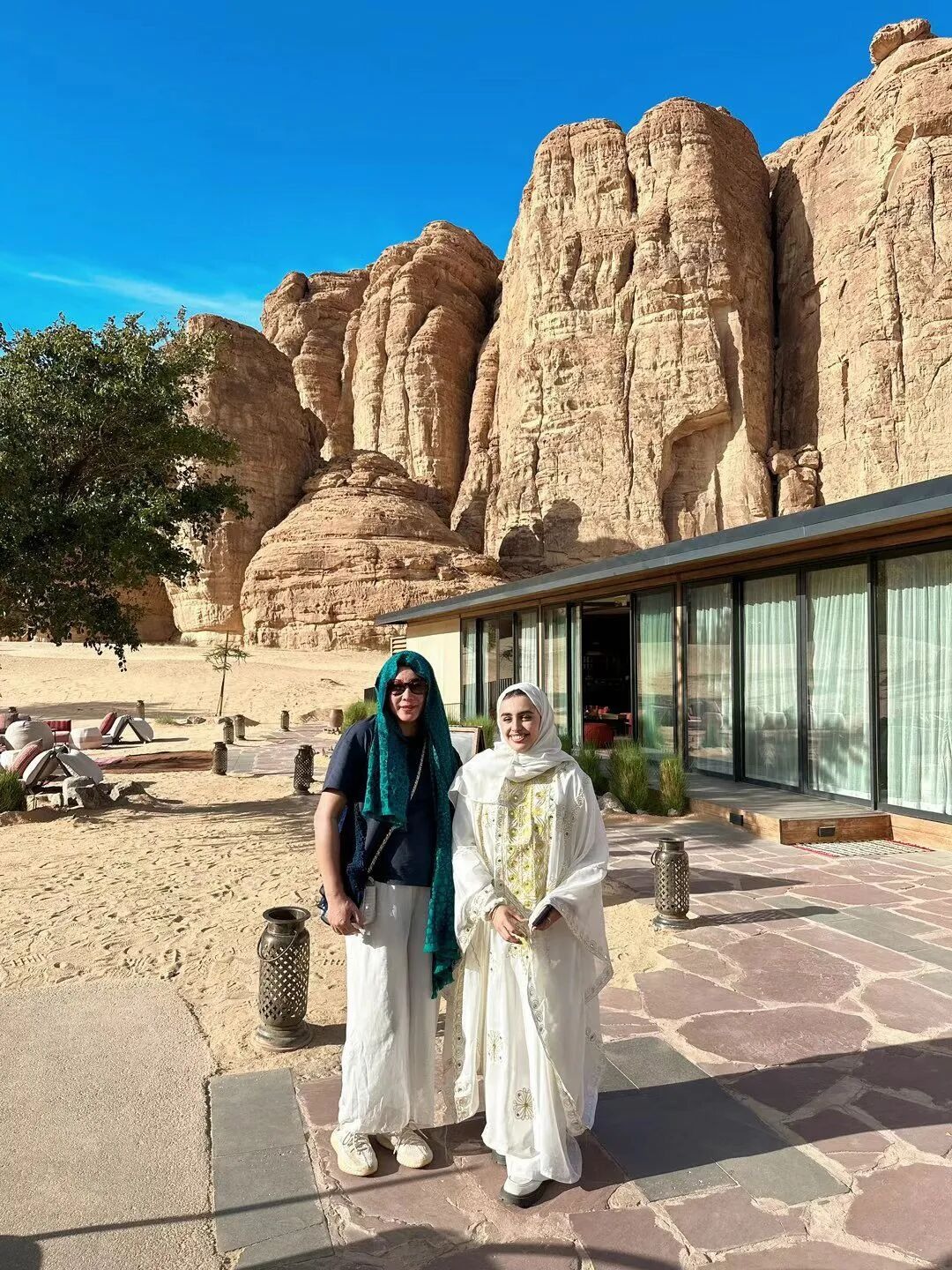
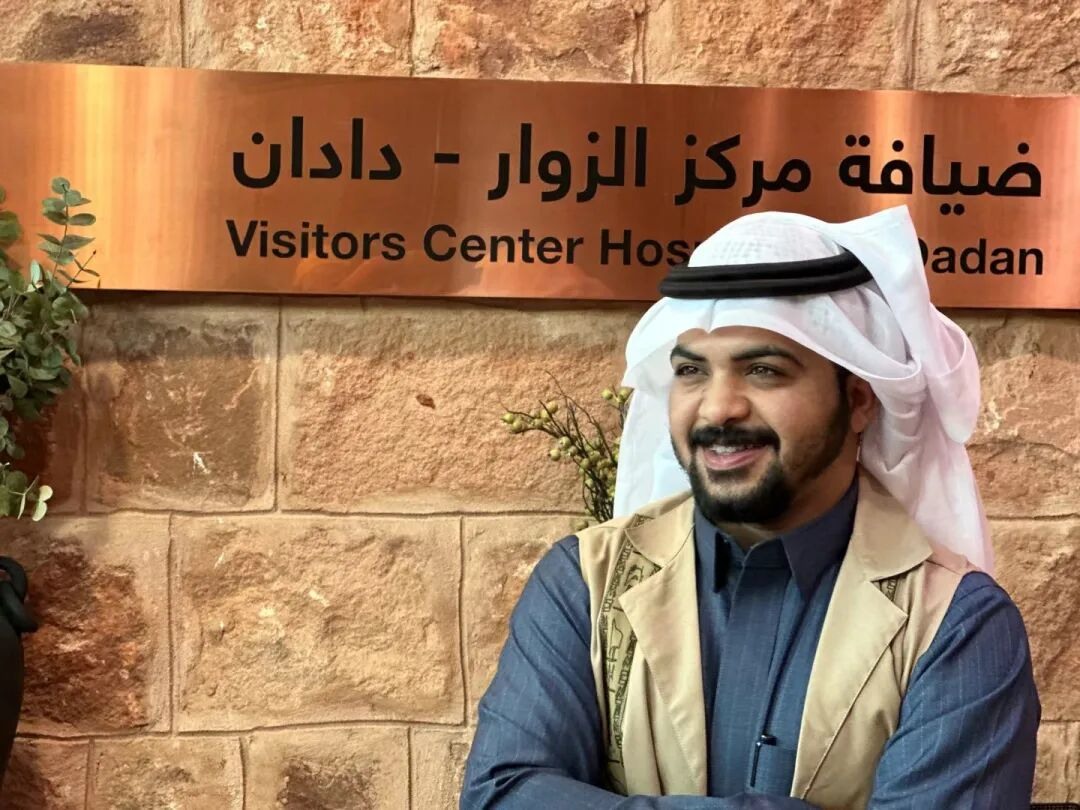
A place becomes memorable to me through these ordinary moments as well as its famous sights. The people I met belong in the story alongside the architecture.
Hegra, and a landscape with a longer memory
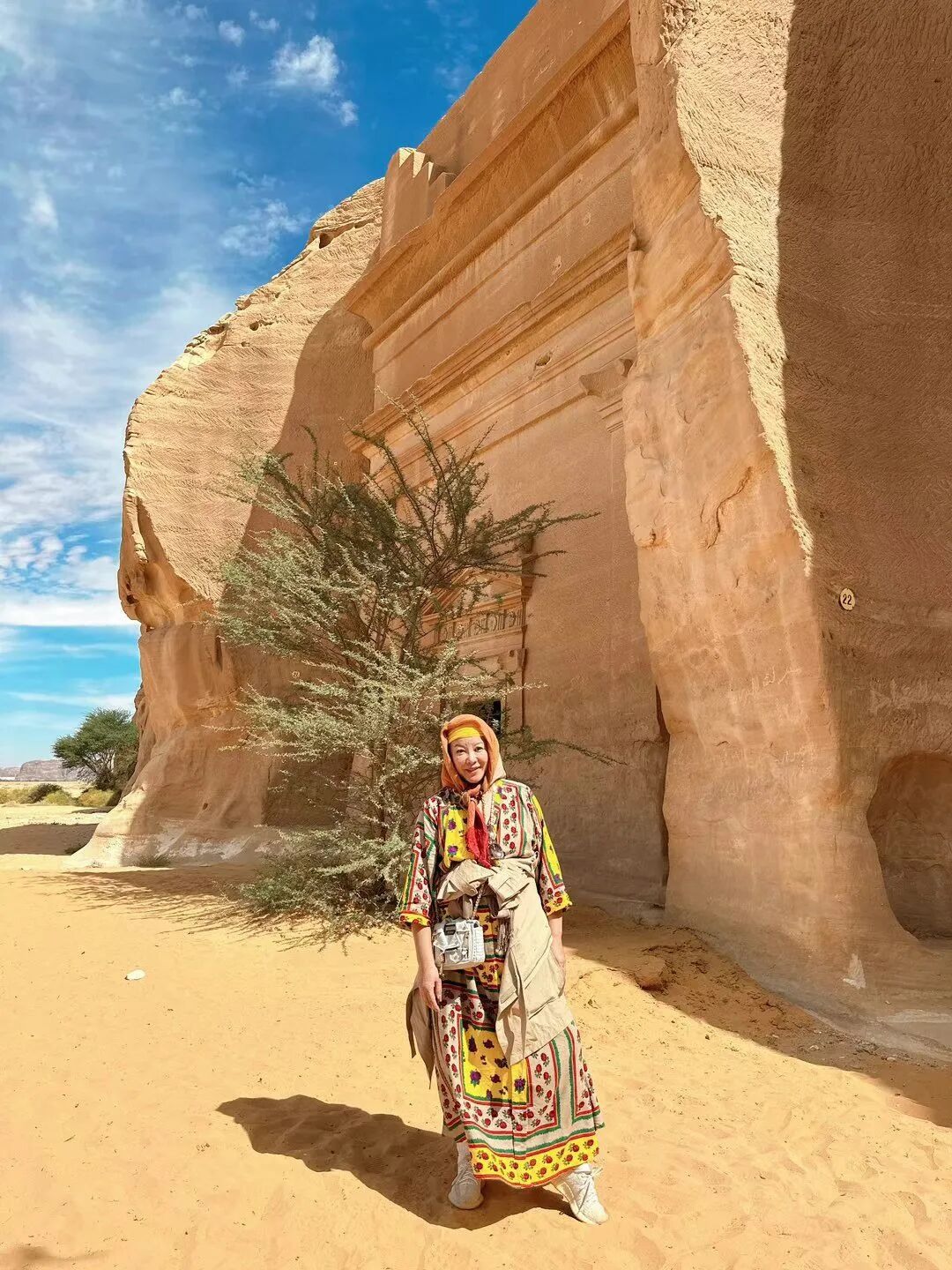
At Hegra, the carved tomb façades gave the sandstone a different meaning. This was the first property in Saudi Arabia inscribed on UNESCO’s World Heritage List, and it preserves a major record of Nabataean civilization south of Petra. The relationship with Jordan made this stop especially interesting after my earlier travels there.
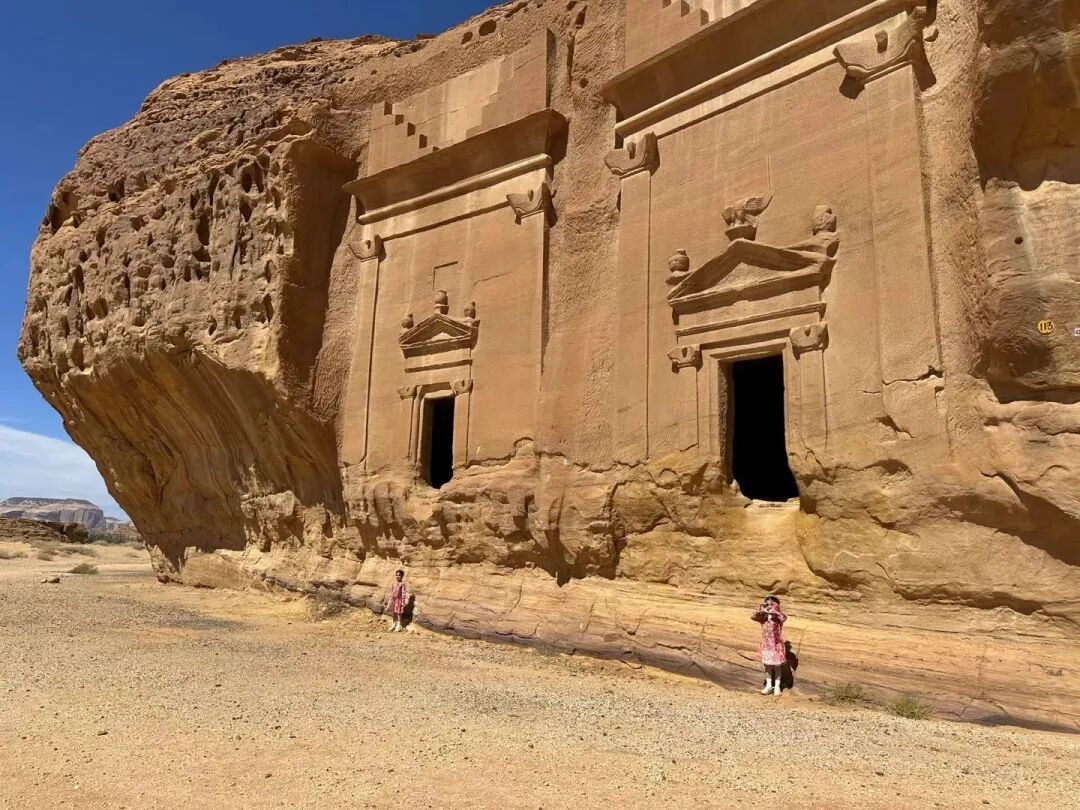
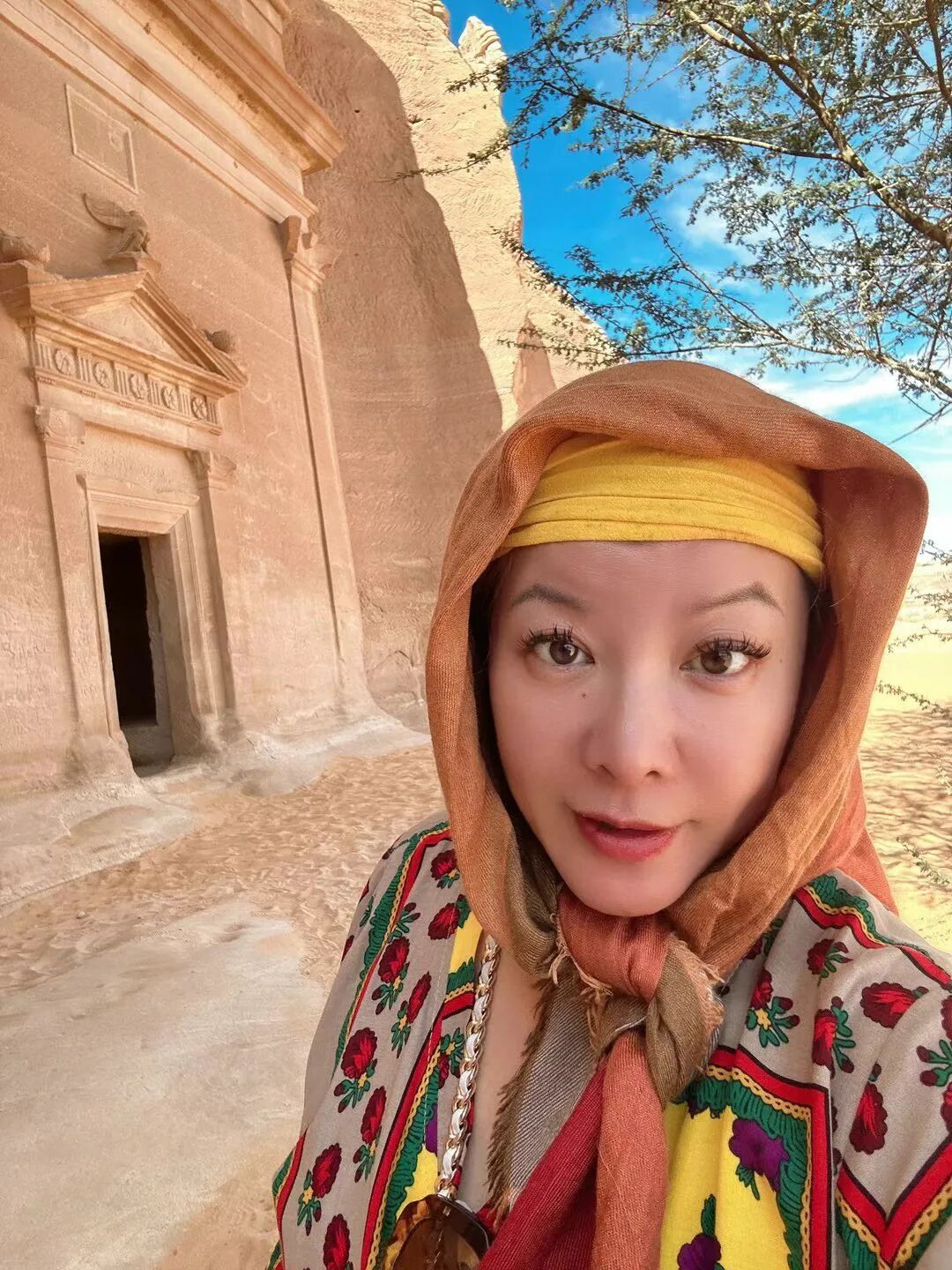
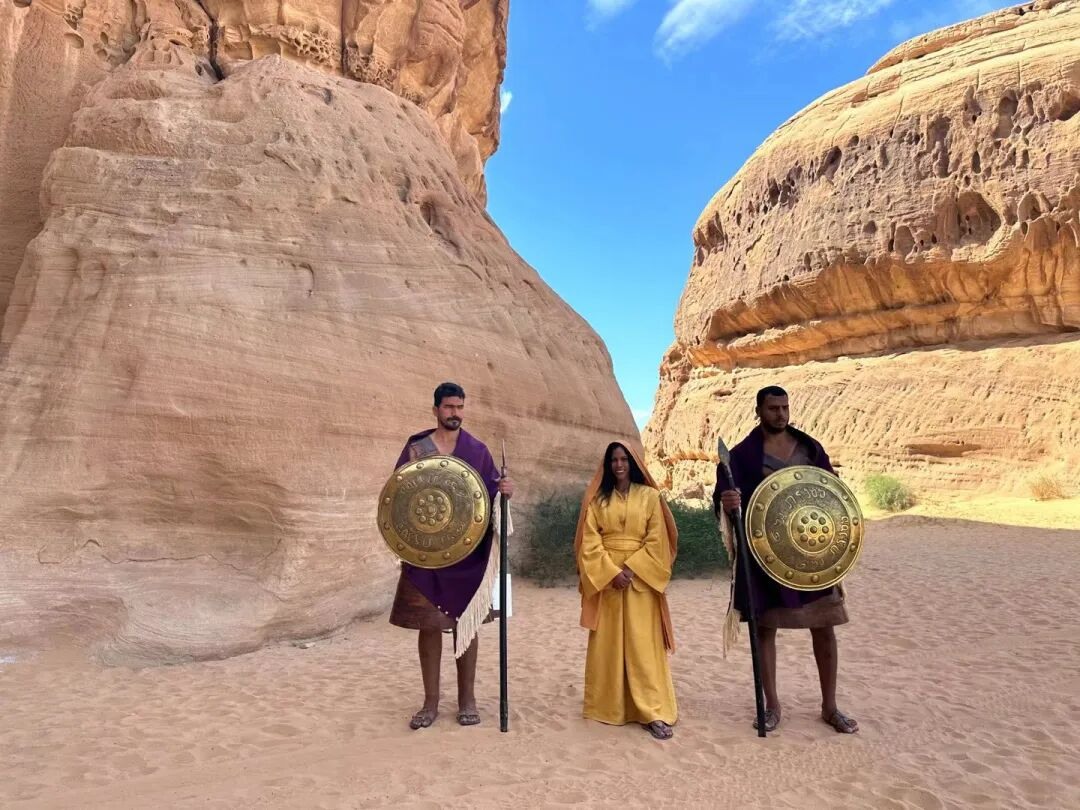
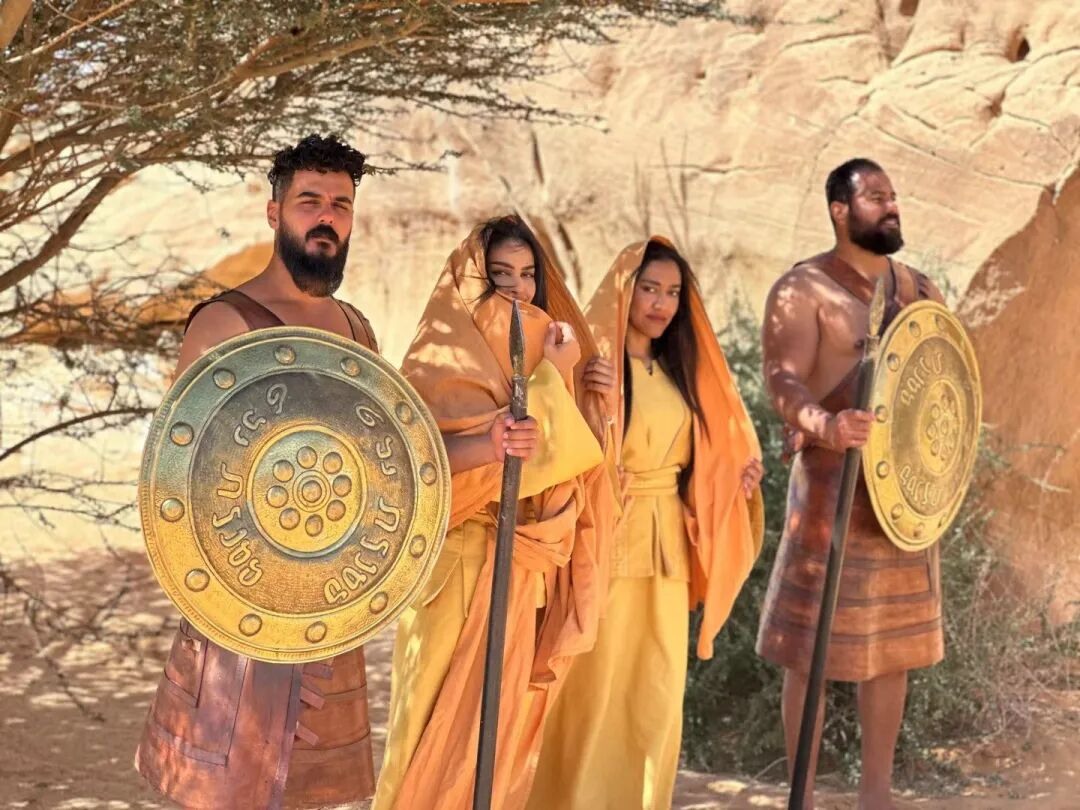
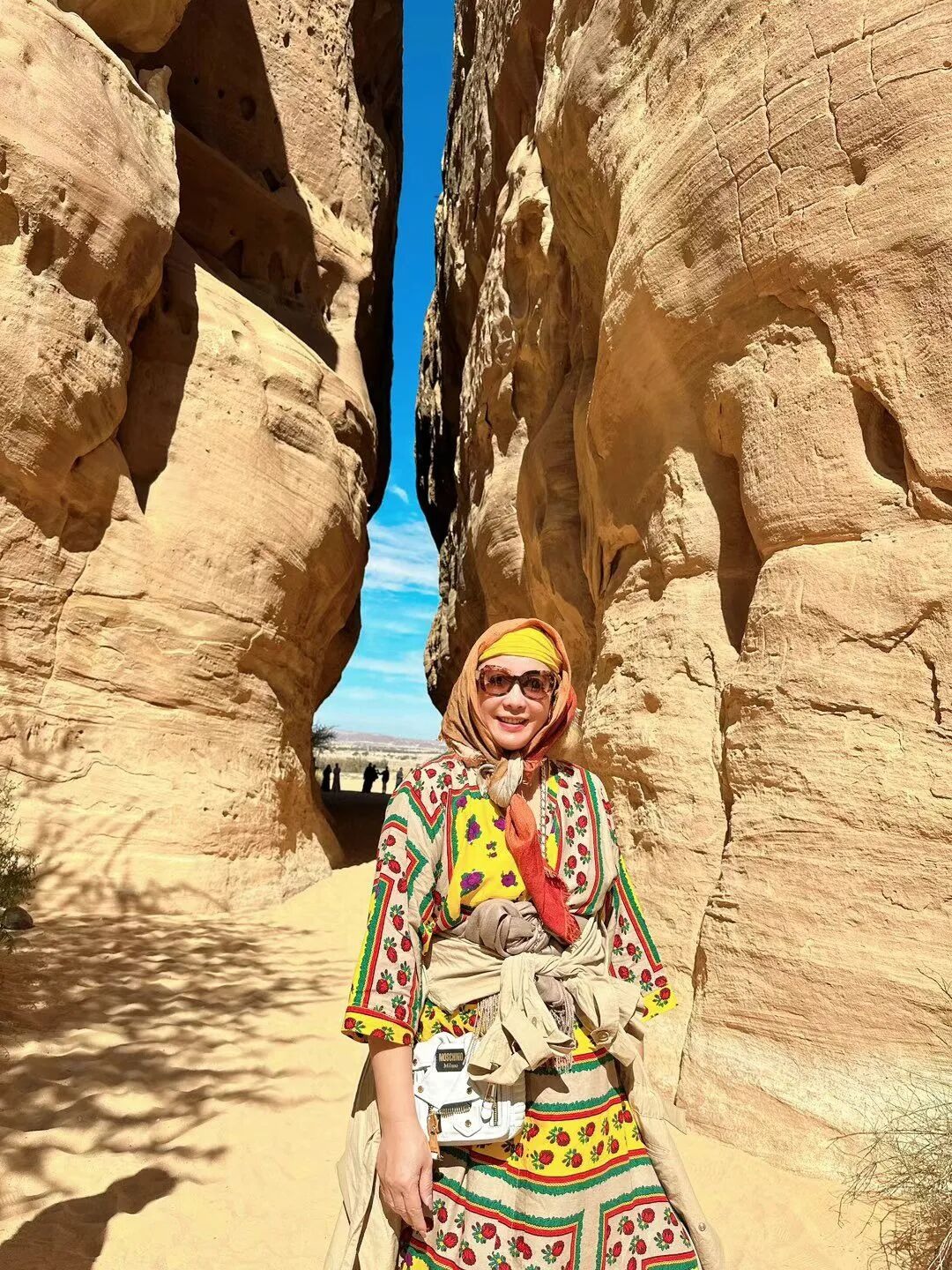
Dadan and the traces of other earlier kingdoms added further layers. I did not want to compress every place into a photograph and move on. I wanted time to look at the rock, the entrances, the forms and the way the sites were being presented.
An exhibition that kept me there until dark
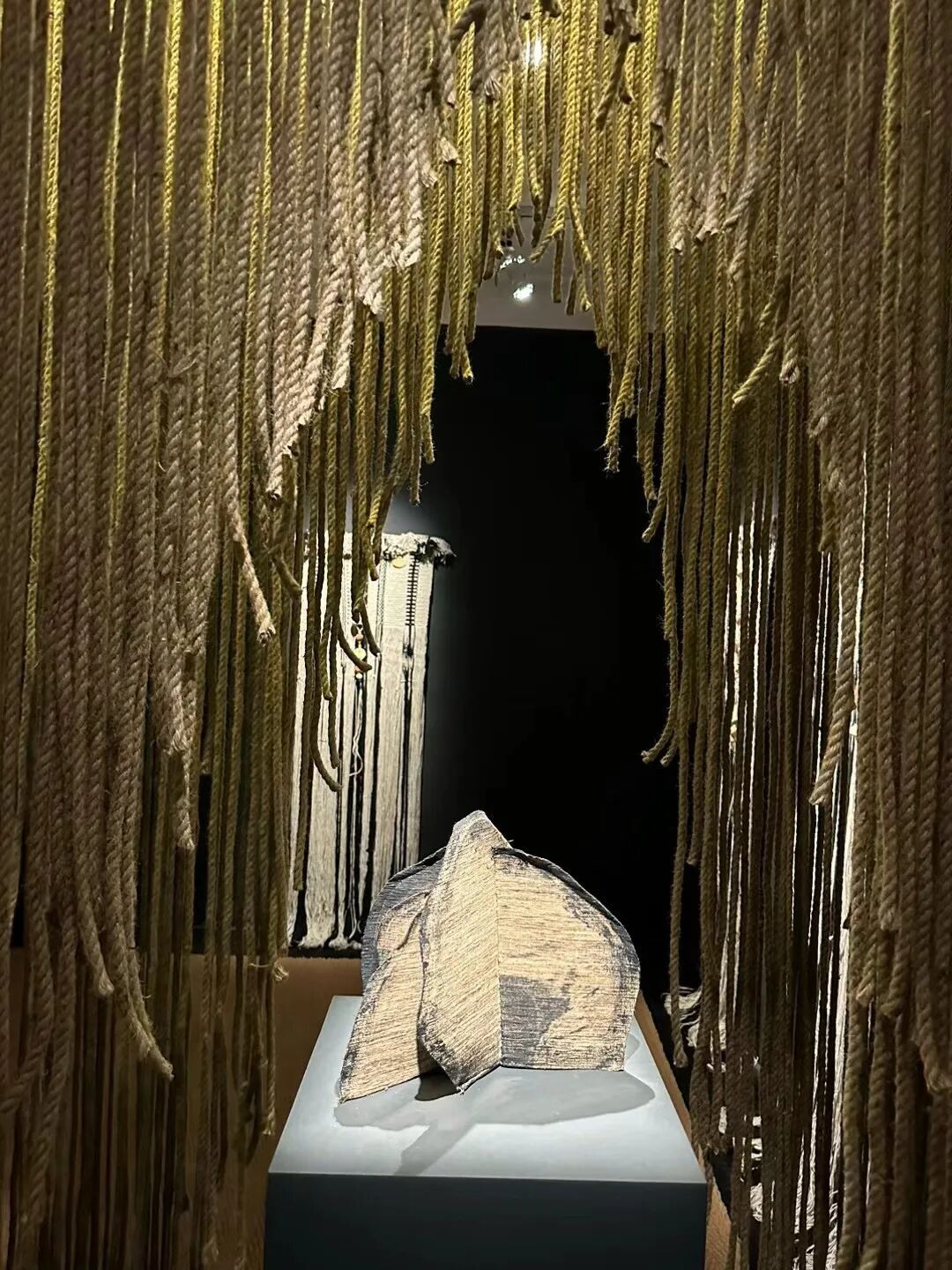
The old-town displays and exhibitions were another reason to linger. Building materials, designed objects and artworks all held my attention. My notes record almost ten hours moving back and forth between these spaces, until it grew dark.
I remember an exhibition by Saudi artist Manal AlDowayan. I read a feeling of emergence and transformation in what I saw. That is my response to the work, rather than a claim to speak for the artist. It reminded me how often art changes the pace of my travels.
Maraya: a building that gives the landscape back
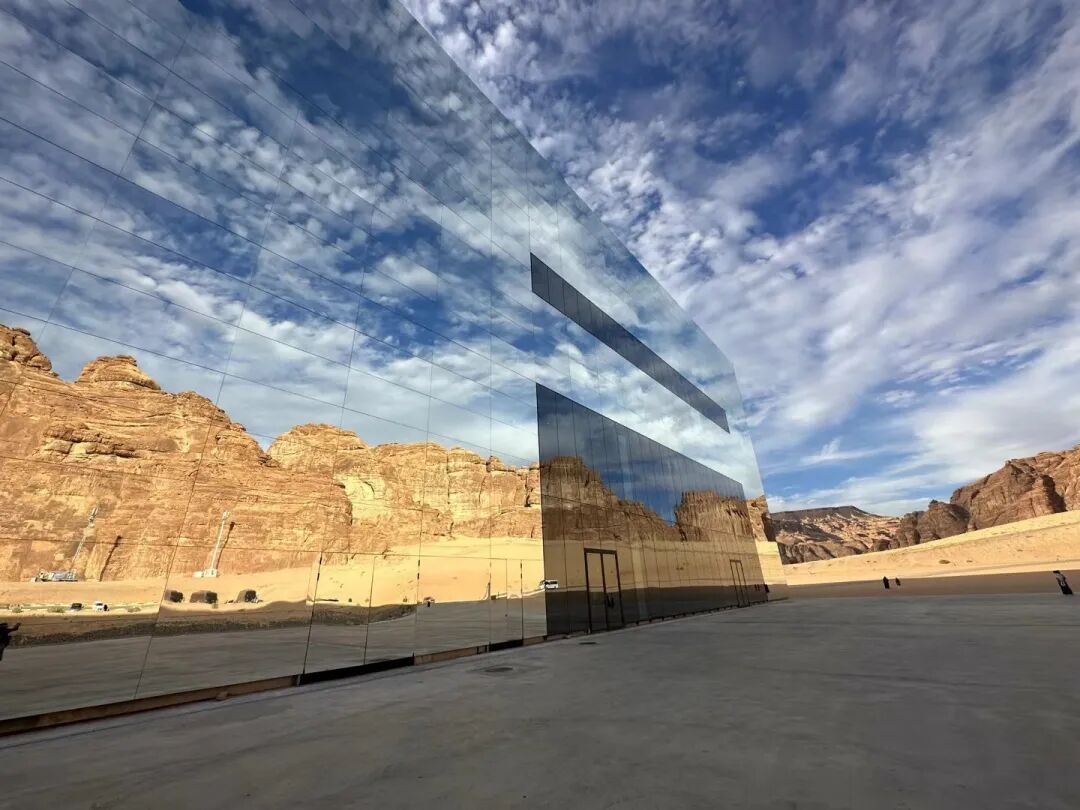
I had wanted to see Maraya for a long time. Designed by the Milan-based studio Gio Forma, the mirrored building reflects the sandstone valley and sky. Walking beside it, I kept taking photographs: the same surface could look different with a change of angle.
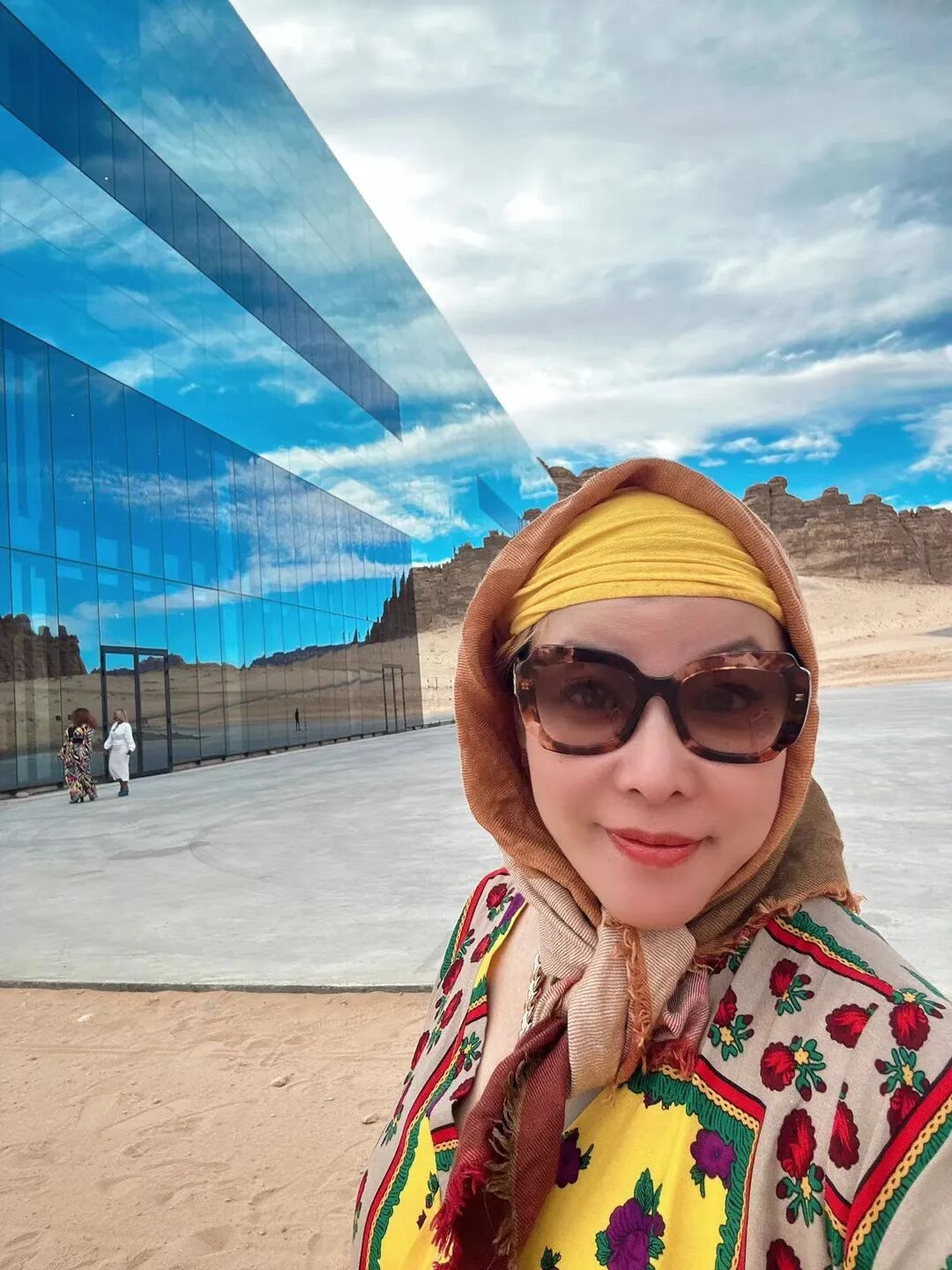
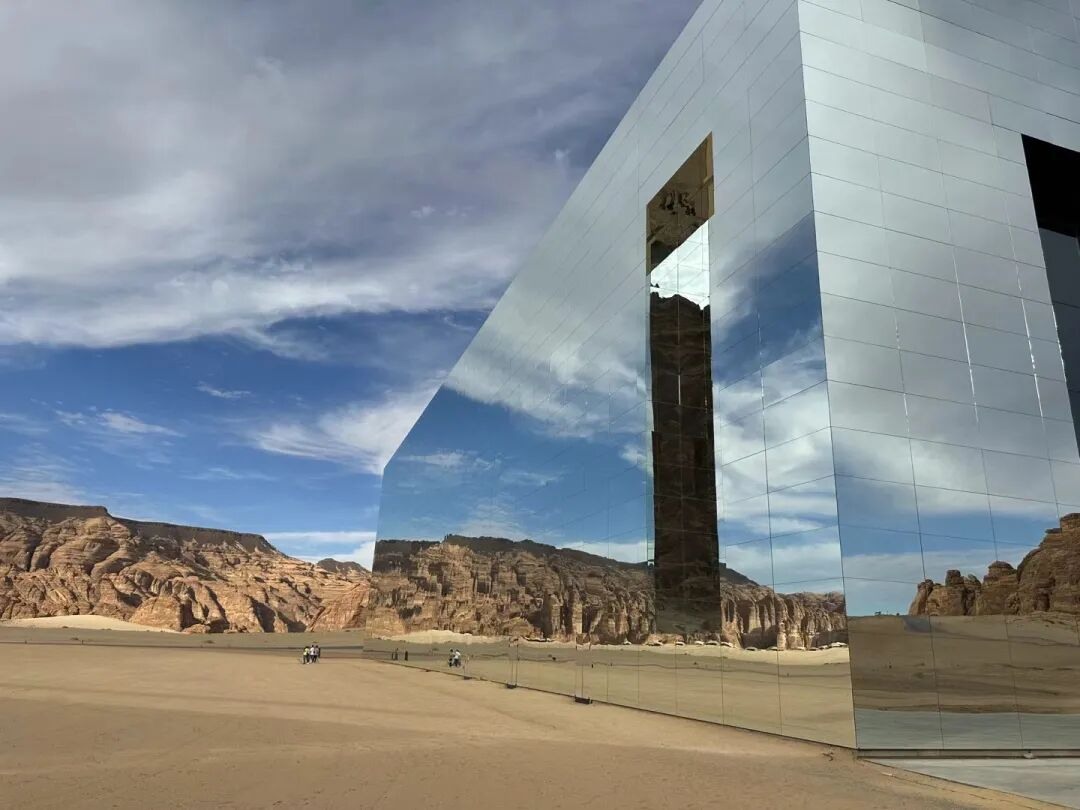
What interested me was the encounter between an emphatically contemporary object and this much older landscape. It gave me a different question from the tombs at Hegra, while keeping me looking at the same stone and light.
Hospitality in the valley
Places such as Our Habitas and Banyan Tree were part of what made AlUla interesting to me as a hospitality observer. The travel photographs hold meals, pools and places to sit against the rock. I was looking at how an experience could make use of a setting without losing the setting itself.
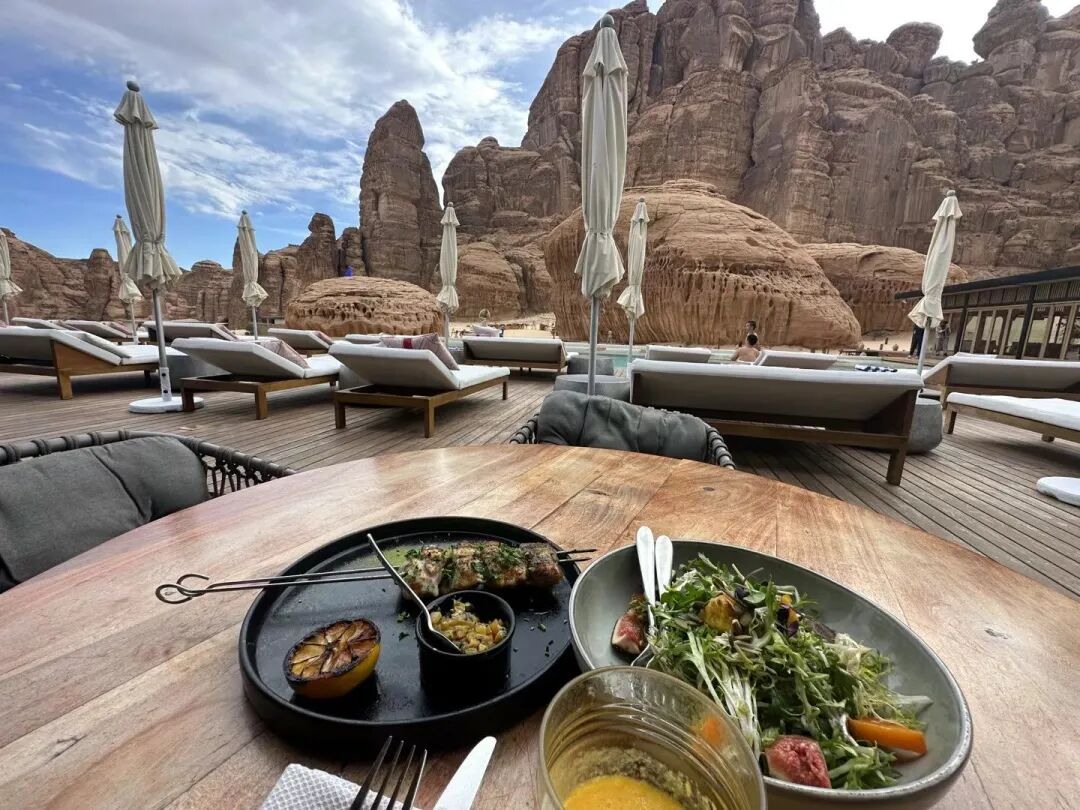
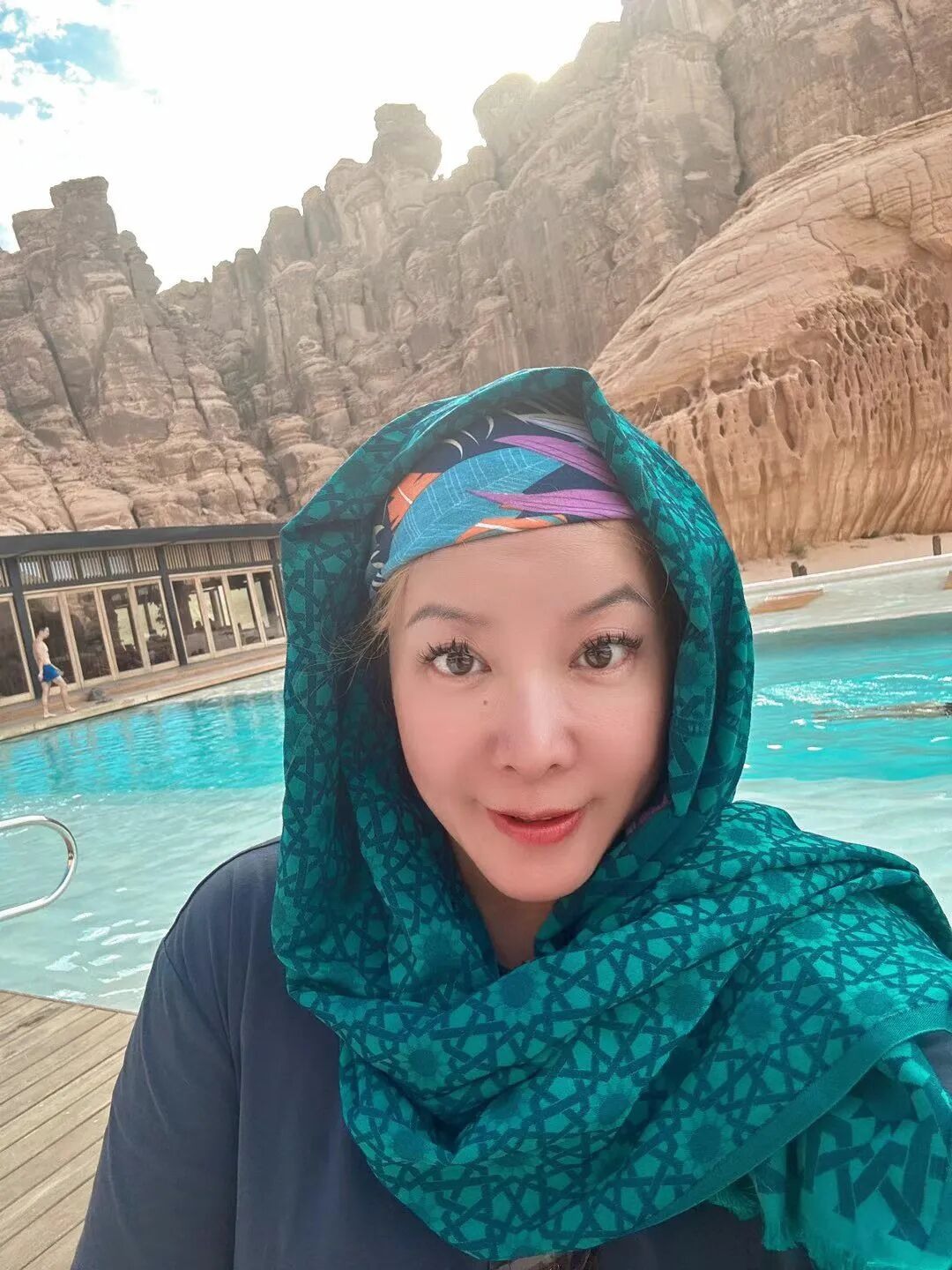
I had thought Saudi Arabia might be a country I visited once. AlUla changed that. I wanted to return, and I could imagine bringing friends who would enjoy the same mixture of heritage, art, food and space.
A future journey, with room to pause
The night sky also belongs in my thinking about a future journey. In 2024, AlUla Manara and AlGharameel were certified as International Dark Sky Parks, the first in Saudi Arabia and the Gulf Cooperation Council region. This recognition concerns designated sites, rather than every part of AlUla.
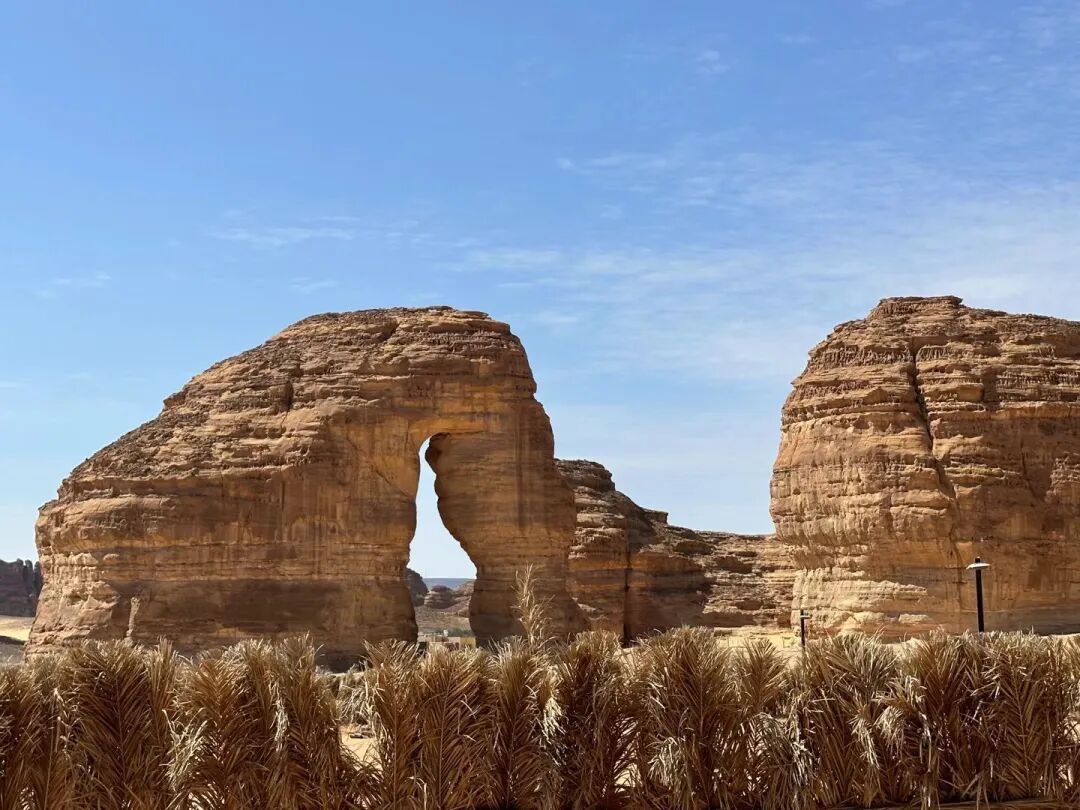
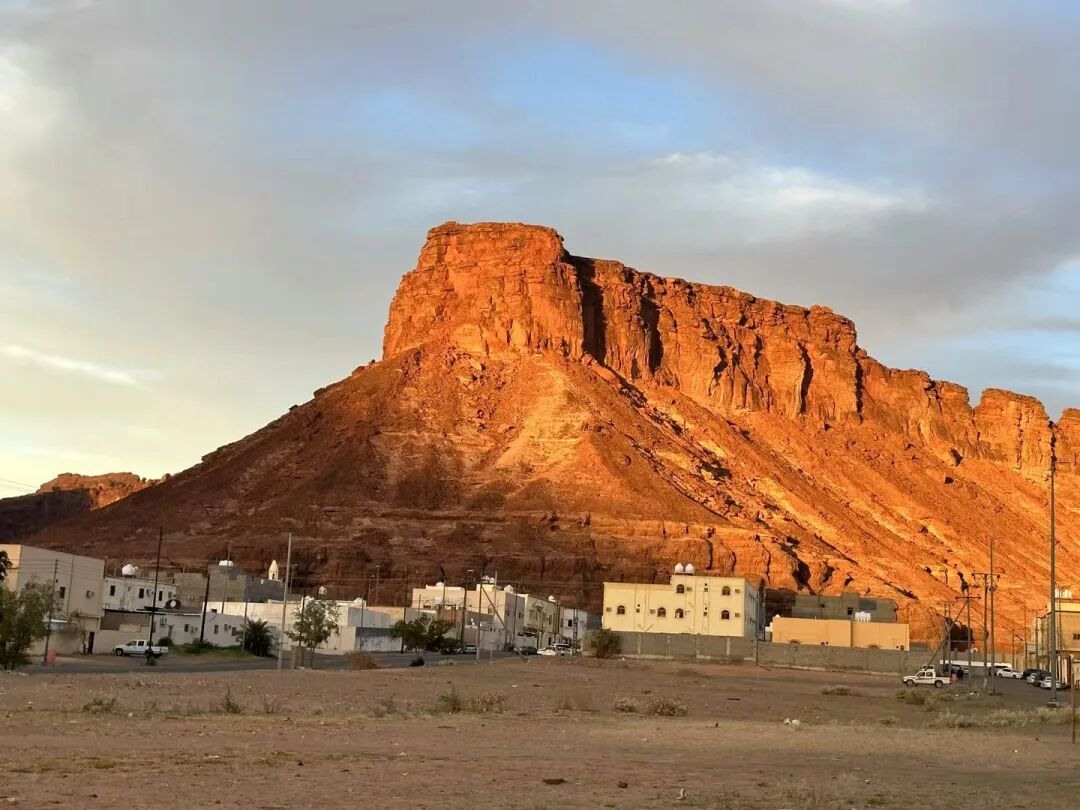
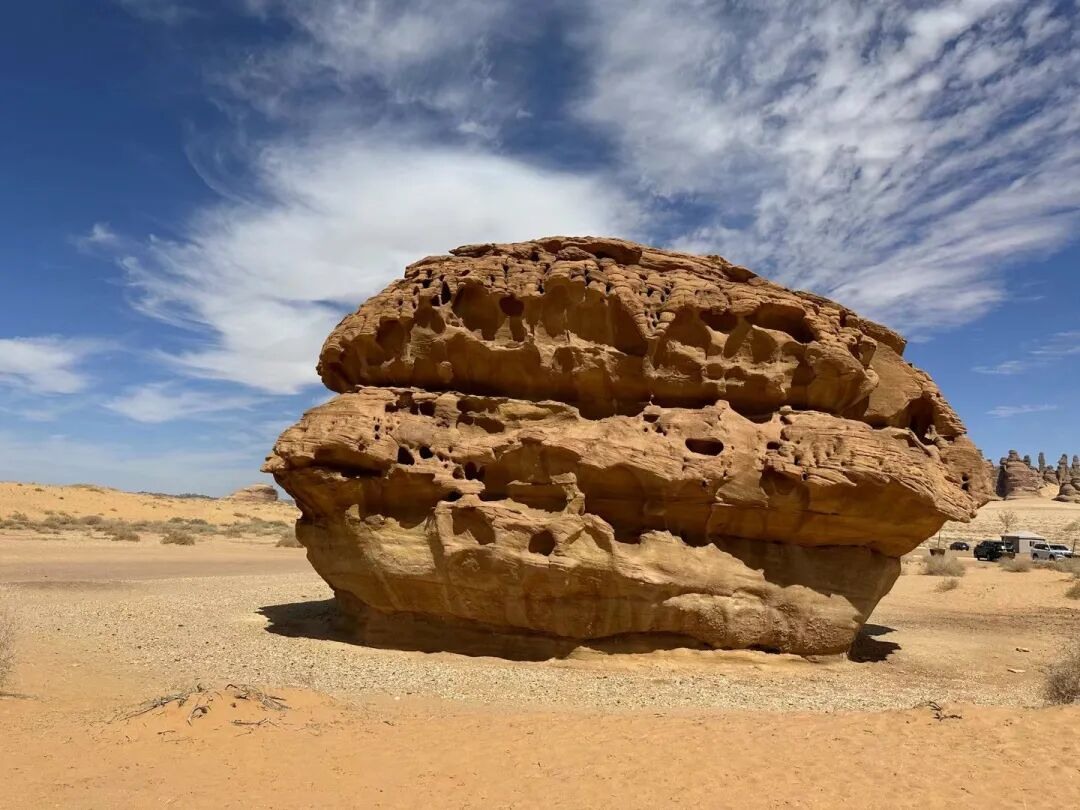
I imagine a thematic journey that leaves time for a conversation after Hegra, a pause at Elephant Rock, and an unhurried evening beneath the sky. These are ideas I would like to develop, not a list of retreat activities I have already experienced.
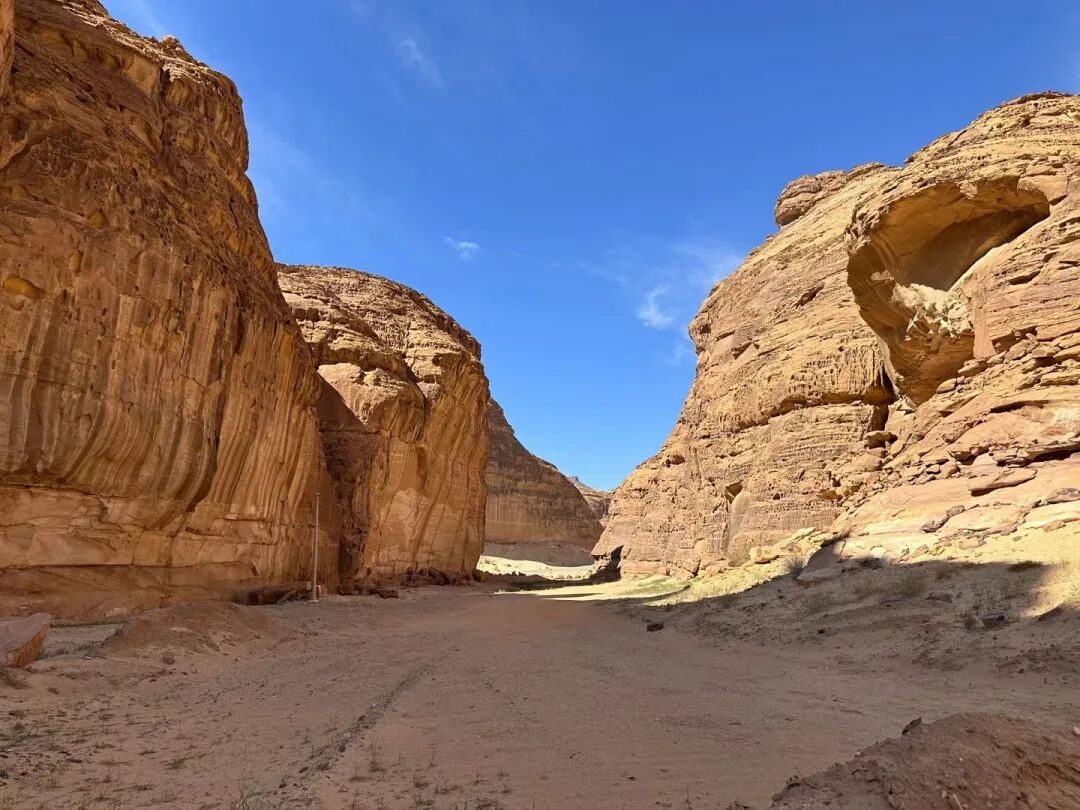
What I want to carry home is that wider sense of time: an ancient place, the people living and working around it now, and enough space to notice what the encounter has changed in me.
Discuss an editorial collaboration ↗