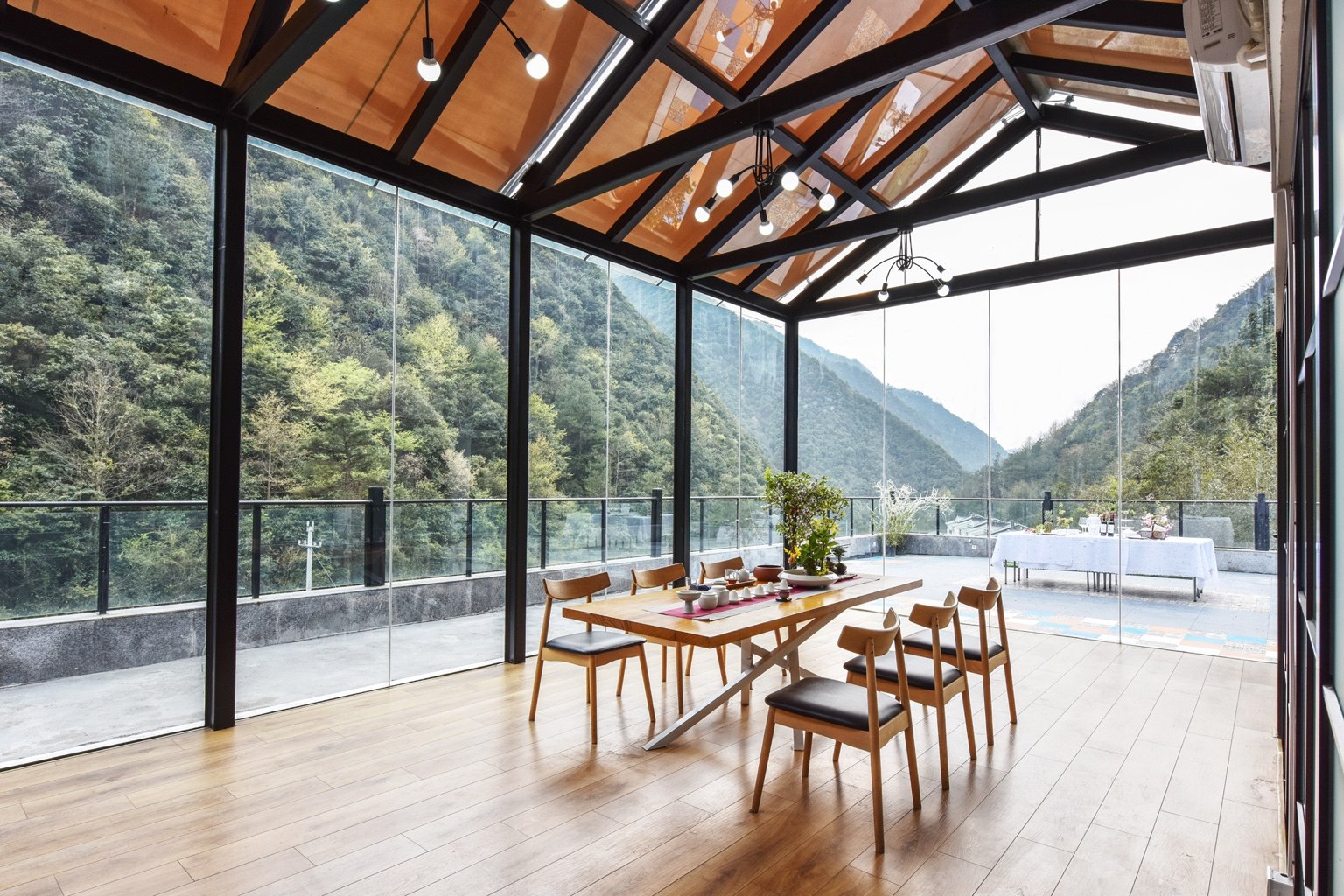
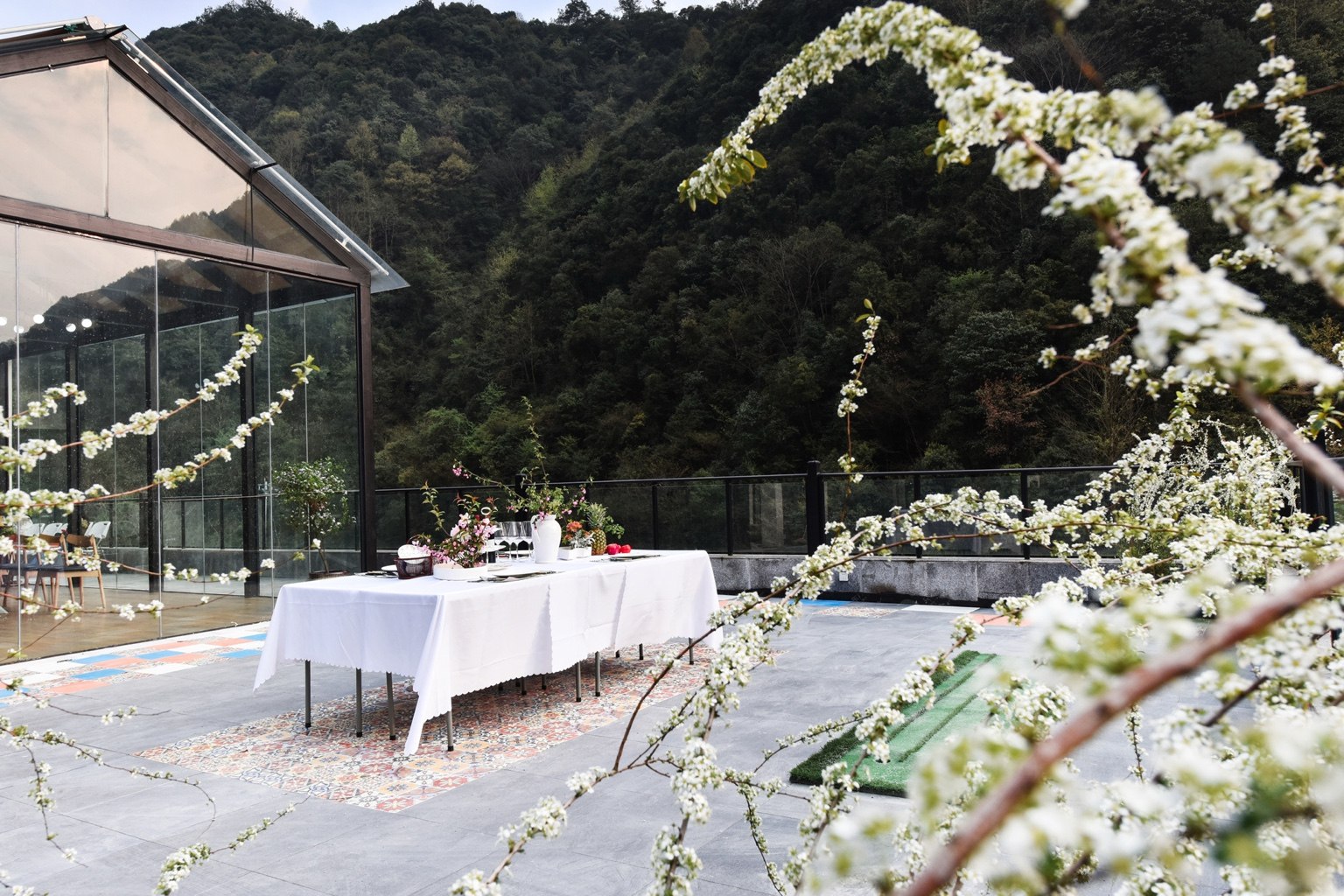
When I look through the photographs of Garden Villa Collection, I keep returning to the glasshouse. Timber overhead, glass along the sides, a table and chairs, and the mountains beyond: the room has a clear relationship with its setting. What interests me is how many different occasions it could hold.
The view is only the beginning
As a traveller, I am often drawn to a beautiful view. As the founder of a hospitality project, I have also had to think about what happens after someone has admired it. Where do they sit? Is there a place to put down a cup? Can people hear one another? Can they settle into the room without feeling that they are disturbing a carefully arranged picture?
I participated in the planning, design, construction and operation of Garden Villa Collection at Qiandao Lake, including its landscape, furnishings and spatial arrangements. That work made the distance between a photograph and a lived experience very tangible to me. A room has to welcome use as well as attention.
One setting, different ways of gathering
The project archive records tea, flower arranging, calligraphy, shared meals, body practices and workshops. These are different activities, but I see a connection between them: people need a setting in which they can take their time and pay attention. A table can support a conversation, a meal or something made by hand.
Looking across those records, I am reminded that hospitality is partly a matter of arrangement. Chairs can face the landscape or each other. A table can become a place for tea or for food. Leaving space can matter as much as adding an object. The same architecture can feel quite different according to how people are invited to use it.
The traveller notices an experience. The host has to make it possible.
The meal belongs to the place
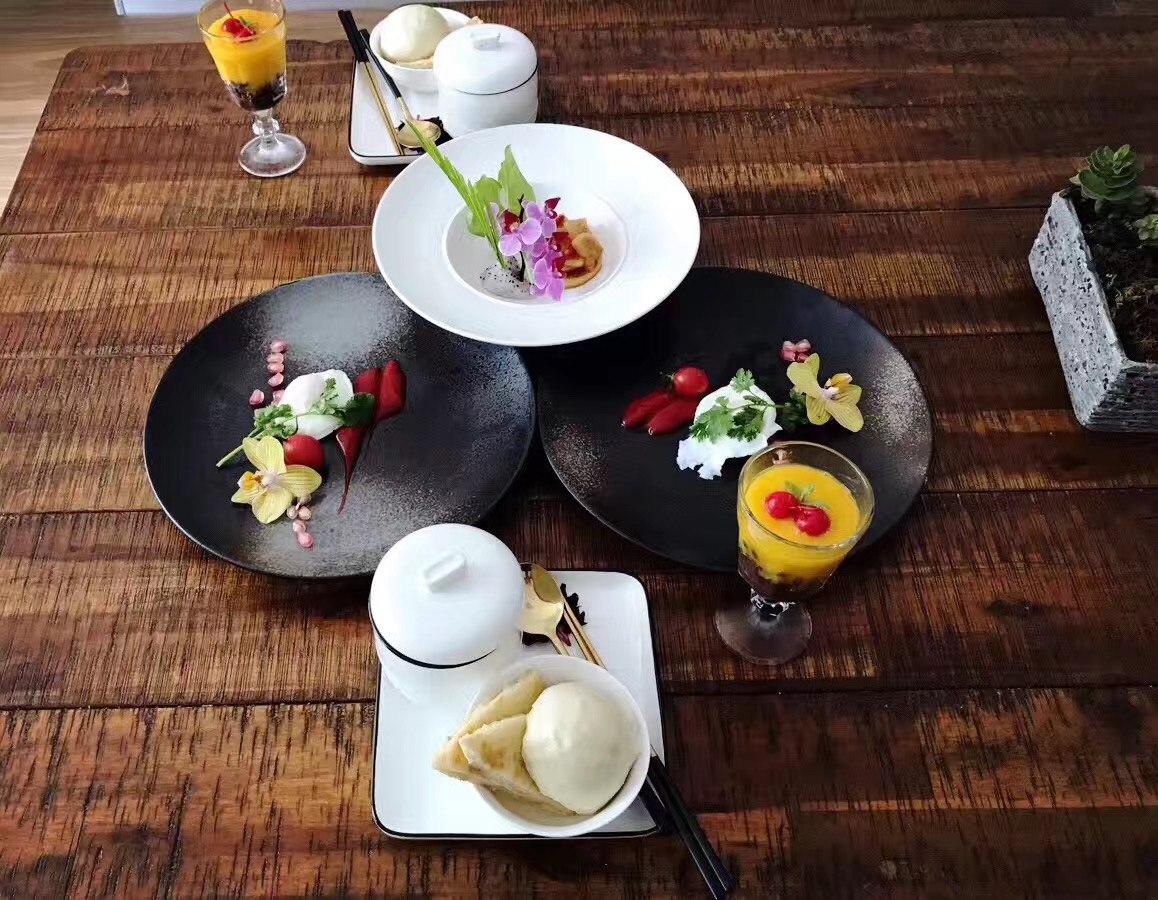
The food photographs bring another part of the project back into view. The wider archive includes growing, harvesting, preparing food and gathering at the table. I am interested in that continuity: the meal is connected to the day around it, rather than appearing as a separate item on a programme.
This also shapes the questions I take into other hotels. I look for a relationship between the landscape, the shared spaces, the food and the pace of a stay. A thoughtful room can help those parts meet. The question is not simply how much has been provided, but how naturally someone can inhabit it.
What I carry into my writing
Travelling and creating a place have given me two ways of looking. One begins with curiosity about what is unfamiliar. The other recognises the practical choices behind what a guest experiences. I want both to remain present in my writing about hotels, design and ways of living.
Garden Villa Collection is my own project. These photographs and reflections describe its history, rather than a current hotel review. As I explore future cultural and retreat collaborations, I keep returning to the same starting point: a setting becomes meaningful through the life that people bring into it.
Discuss an editorial collaboration ↗